Blog
May 14, 2026
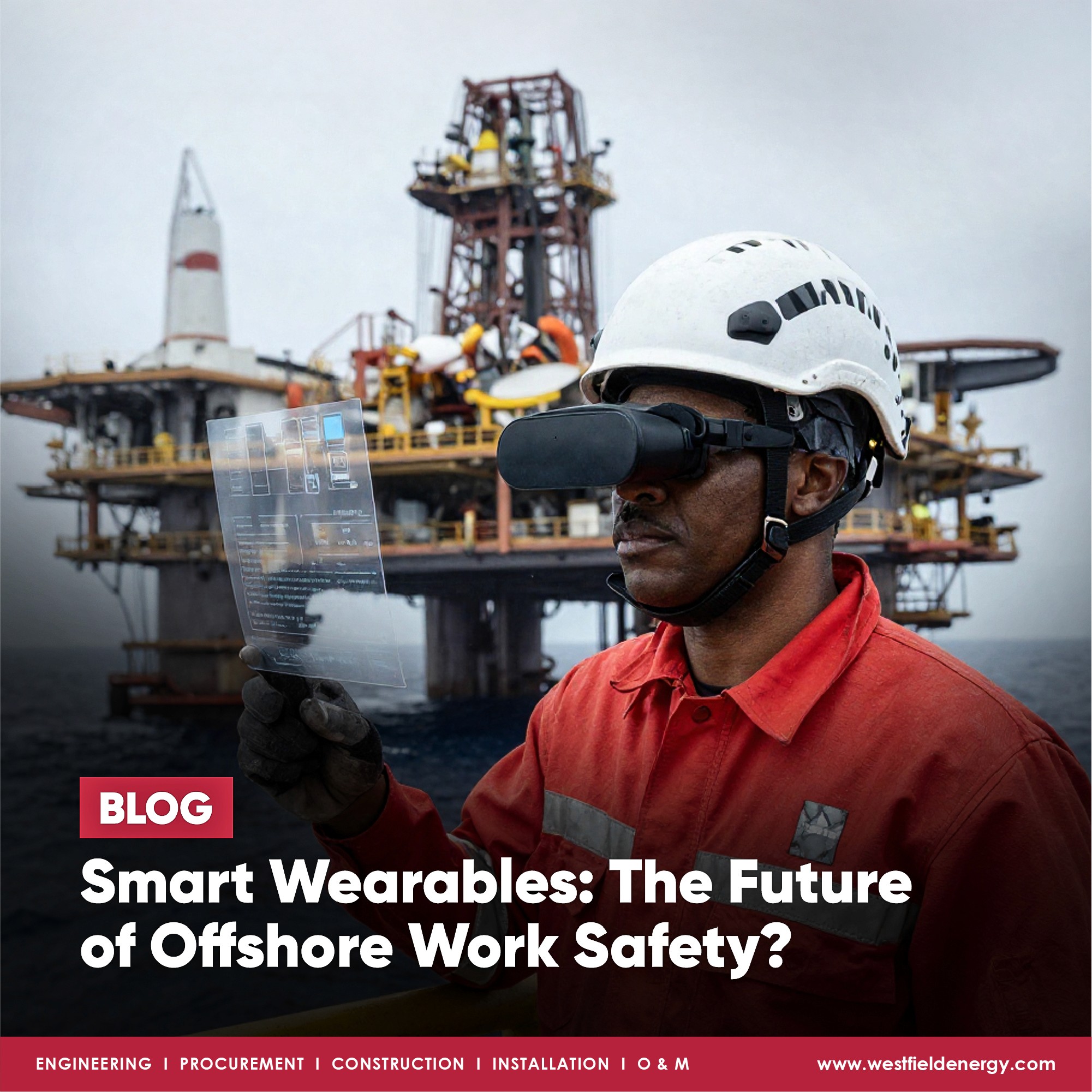
Smart Wearables: The Future of Offshore Workforce Safety?
14 May 2026
Estimated read time: 5 mins
Blog Summary
As offshore operations become increasingly complex, workforce safety remains a core industry priority. Research from industry and regulatory bodies such as the International Association of Oil & Gas Producers (IOGP) and CDC/NIOSH highlights that human factors, fatigue, and environmental exposure continue to be significant contributors to offshore safety risks. Smart wearable technologies including biometric monitoring systems, smart helmets, and exoskeletons are emerging as practical tools for improving offshore safety by enabling real-time monitoring, reducing physical strain, and strengthening emergency response capabilities. As digital transformation accelerates across the energy sector, wearable technology is becoming an increasingly valuable layer within modern offshore safety systems.
Offshore Workforce Safety and the Rise of Smart Wearables
Offshore operations continue to expose personnel to physically demanding and high-risk environments. According to the U.S. Government Accountability Office (GAO), wearable technologies are increasingly being explored across high-risk industries to improve situational awareness and reduce workplace incidents.
In offshore environments, challenges such as extended rotations, harsh weather conditions, and heavy-duty operational tasks make workforce protection a critical operational focus. Smart wearables are increasingly being adopted as part of this response. These are sensor-enabled devices integrated into personal protective equipment (PPE) that collect and transmit real-time data on worker health, environment, and activity levels.
Smart Wearable Technologies in Offshore Operations
Smart Helmets
Smart helmets integrate traditional head protection with digital capabilities such as communication systems, lighting, and augmented reality (AR) interfaces. According to the European Commission, wearable technologies are increasingly contributing to improved offshore safety by enabling faster access to operational information and supporting remote assistance in complex tasks.
In offshore environments, AR-enabled helmets can support maintenance and inspection activities by allowing technicians to receive live instructions without breaking workflow or safety protocols.
Biometric Monitoring Systems
Biometric wearables track physiological indicators such as heart rate, fatigue levels, dehydration risk, and heat stress. CDC/NIOSH research on wearable sensors emphasizes their potential role in supporting early intervention and reducing risk exposure in hazardous work environments.
In offshore operations, this enables supervisors to detect early signs of worker fatigue or stress before they escalate into safety-critical incidents.
Exoskeleton Technology
Exoskeletons are wearable mechanical support systems designed to reduce physical strain during repetitive or heavy lifting tasks. Research published in Applied Sciences highlights that occupational exoskeletons can significantly reduce musculoskeletal load in physically demanding environments.
For offshore personnel, this translates into improved endurance, reduced injury risk, and enhanced long-term workforce sustainability.
Why Smart Wearables Matter Offshore
Smart wearables are becoming increasingly important as offshore operations evolve toward more data-driven and digitally integrated systems.
Key benefits include:
Real-time personnel monitoring
Faster emergency response capability
Reduced physical fatigue and strain
Improved situational awareness
Enhanced operational efficiency
Collectively, these improvements contribute to stronger safety performance and more resilient offshore operations.
Real-World Offshore Applications
The value of wearable technology becomes most evident in high-risk scenarios. Biometric systems can detect early signs of heat stress or fatigue, enabling proactive intervention before escalation.
Exoskeletons support physically demanding tasks such as lifting, pipe handling, and repetitive maintenance work, reducing long-term injury risks. During emergencies such as gas leaks or fire incidents, smart helmets with AR capability can provide evacuation guidance and real-time operational instructions, improving decision-making under pressure.
The Future of Offshore Workforce Safety
As offshore operations continue to evolve, smart wearables are shifting from experimental tools to strategic safety infrastructure. Reports from IOGP and GAO suggest that industries operating in high-risk environments are increasingly prioritizing real-time monitoring systems and human-centric safety technologies.
While offshore environments will always involve inherent risk, wearable technologies are helping redefine how that risk is monitored, managed, and mitigated. The future of offshore safety will likely be shaped by the integration of human performance data, environmental intelligence, and connected wearable systems.
References
Centers for Disease Control and Prevention (CDC/NIOSH) – Wearable Sensors: An Ethical Framework for Decision-Making https://www.cdc.gov/niosh/bulletin/2017/sensors.html
International Association of Oil & Gas Producers (IOGP) – Safety https://www.iogp.org/workstreams/safety/safety/
U.S. Government Accountability Office (GAO) – Science & Tech Spotlight: Wearable Technologies in the Workplace https://www.gao.gov/products/gao-24-107303
European Commission – Wearable technology boosts offshore industry safety https://cordis.europa.eu/article/id/436649-wearable-technology-boosts-offshore-industry-safety
CDC/NIOSH – Wearable Technologies for Improved Safety and Health on Construction Sites https://www.cdc.gov/niosh/bulletin/2019/wearable-construction.html
Applied Sciences Journal – Wearable Technologies in Occupational Safety and Health https://www.mdpi.com/2076-3417/16/10/4715